“He Killed Optimus Prime” an interview with Ron Friedman!

Today we have a great look into the making of the original Transformers Cartoon movie thanks to a recent interview with the Ron Friedman the writer of the film. Check out the full Interview AFTER THE JUMP!
(Source: toddmatthy.com)
By Todd Matthy
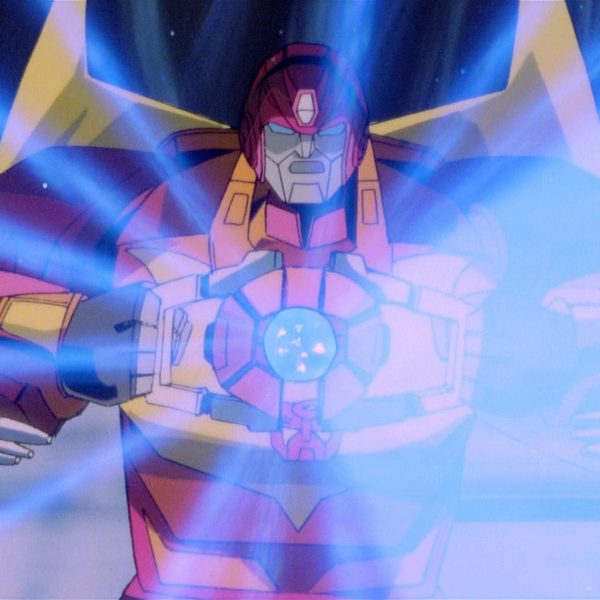
In the summer of 1986, children were traumatized when Optimus Prime sacrificed himself to stop his archrival, Megatron. But it wasn’t Megatron who pulled the trigger, it was a writer named Ron Friedman.
Ron Friedman wrote Transformers: The Movie. He wrote the five-part miniseries that launched GI Joe. He is close friends with Stan Lee and helped Stan develop The Marvel Action Hour, featuring Iron Man and Fantastic Four. He has written episodes of All in the Family, Happy Days, and Fantasy Island. In addition to his writing credentials, Ron is an architect and a teacher at Chapman University.
In 2014, Ron plans to chronicle his experiences as a writer in the memoir, I Killed Optimus Prime. The book promises a fascinating look behind the scenes of the shows that defined our childhood.
I had the privilege of speaking with Ron about his career, his friendship with Stan Lee, what he thought when he first saw the Transformers, how Orson Welles became Unicron, and why he didn’t want to kill Optimus Prime.
So, to kick off the 30th Anniversary of the Transformers, Ron Friedman, the man who killed Optimus Prime.
WARNING: Some language.
What made you decide to chronicle your experiences as a writer?
I was given great opportunities. Writing animation wasn’t what I set out to do. Although I always loved animation, nobody ever considered it a job for writers. They feel the same way about comedy. It seems the only meaningful writing is something where everybody dies at the end or there’s a moral surface where everybody can lie down and bask in God’s light. So, comedy and animation have always been denigrated until these last several years when Pixar, Disney, and the Marvel Universe came of age in the sense that iconic material was made into feature films. Suddenly it was okay to have written animation. When I did it no working writer of any substance wanted to be an animation writer. They avoided it and the people that did were considered beyond hope and not “real writers.”
Hasbro did a talent search to find “real writers” to create the GI Joe pilot. I won the contest. I won because I wanted to do a five-part miniseries because there were so many characters that over the course of a 22-minute episode you’d only have time to watch them walk by. That’s not going to endear a young audience to characters.
It was completely accidental. I was aiming for Broadway, where I was a play doctor. I had plays under option, I had written some novels, and was doing great writing one-hour and half-hour television shows. Then suddenly this great opportunity came and awakened in me everything I always loved about animation, speculative fiction, and writing action sequences nobody could afford to do for real on a large motion picture screen. Hasbro was so pleased with GI Joe they not only had me rewrite the first 64 episodes of The Transformers (to make sure they had humor and the characters resonated) and gave me the job of writing Transformers: The Movie.
In the meantime I wrote a five-part pilot for a series based on a line of toys called Air Raiders, which I’m sure nobody knows about. They gave me the artwork and the basic idea, which was a variation on Dune. It was about a universe where various planetary groups sought control of air. The toys were to be air powered, the designs looked great, and I came up with a great miniseries. The closest I can compare it to is Game of Thrones. Then they sent me the prototypes. Visualize a little rubber figure in uniform with a foot long hose connected to a bulb. You squeezed the bulb and the figure contorted as if it were having a seizure. Who wouldn’t love that? Then there were the rocket ships that were made of rubber with a foot long tube with a squeeze ball that made a flying fart. They asked me what I thought and I said, “It’s a whoopee cushion without the fun.” So I was their go to guy for a while.
One of the things in my background was an understanding of how kids connect to icons and stories. It happened when I was architectural student at Carnegie Tech. The Provost asked me to participate in a pilot program to determine what causes children to attach themselves to comic heroes. I was sold. A couple of days a week I would interact with kids presenting them with new games, characters, and traditional icons. The department of psychology, with the school of business, would try to create a formula that assessed when kids became connected and what emotional triggers caused them to lock on. A lot of it was common sense because I had kids and saw how they responded. It was really useful because it validated what I saw myself when I as a kid connecting to various comic book, cartoon, and film characters. It gave me some insight into what I needed to do and was one of the reasons I didn’t want to kill Optimus Prime.
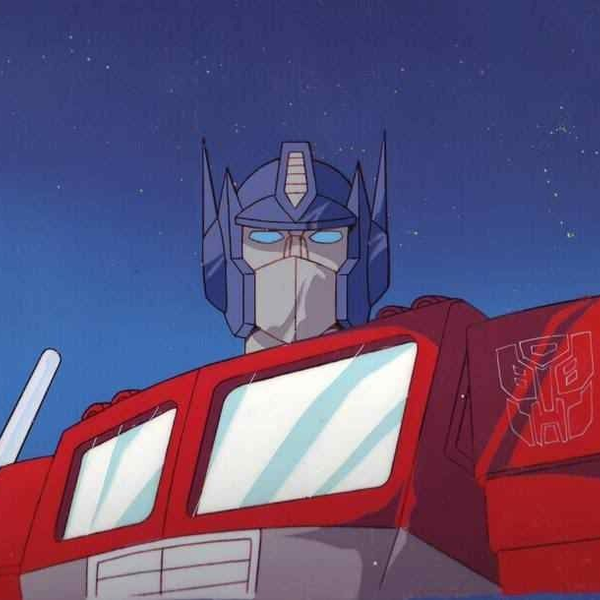
Optimus Prime was the transcendental figure that is the glue for every legend or story. The transcendental character of big daddy, big brother, your personal champion, the repository of all that is good and worthy. He was the true center of the Autobot family. I think about the gathering of various comic icons and their peers as families. Who was Megatron? The worst possible father figure. He topped King John in the days of Robin Hood. Who was Starscream? He’s Iago, the treacherous second in command, the bad uncle or younger brother who lusts after his older brothers wife. I recognized that I needed to assign family identities to characters in order to create the recognition factor that young people need. They cannot verbalize this; it’s beneath the surface. To remove Optimus Prime, to physically remove Daddy from the family, that’s wasn’t going to work. I told Hasbro and their lieutenants they would have to bring him back but they said no and had “great things planned.” In other words they were going to create new more expensive toys.